[Image by Anfaenger from Pixabay]
As a pro-life person, I have always seen abortion as a human rights question. Unborn babies are human, humans deserve human rights, and the most basic right is the right to life. Believing that all humans have the right to not be killed is, for most pro-life people, the simplest version of the pro-life position, and grounding the pro-life position on human rights is by far the most common position taken by pro-life people. (Side note: in my experience, this includes religious pro-life people. While they may be pro-life and religious, they are unlikely to be pro-life because they are religious. Even amongst religious pro-life people, opposition to abortion tends to be grounded in a commitment to human rights, including the right to life.)
The commitment to viewing abortion through a human rights lens is not, however, necessarily the most intuitive framing for many people, particularly younger people. In fact, relying on a human rights frame tends to resonate more with older people – roughly, those of Gen X.
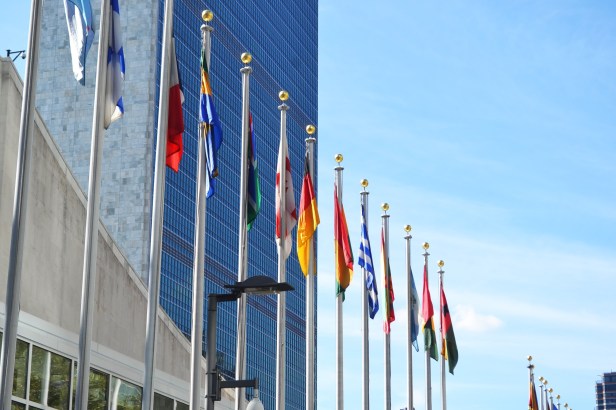
There are pretty simple historical reasons for this in my opinion. The 20th century had some truly horrific human rights abuses, most notably the genocide against Jewish people during the Holocaust. Sadly this is not the only example of human rights atrocities from the 20th (or indeed any) century, but notably, following World War II, a human rights framework came to prominence in describing and condemning these atrocities. The United Nations was formed in the wake of World War II, and the Universal Declaration of Human Rights was accepted by the UN in 1948. This was a genuine landmark achievement, and much of the development of International Human Rights Law drew inspiration from the Declaration. For members of the generation shaped by World War II and its immediate aftermath, this new framework was a hugely positive development.
It is no coincidence therefore that from the 1960s onwards, as countries gradually legalised abortion, pro-life advocates grounded their opposition using the language and concepts of human rights. Even today, many pro-life advocates still reference and quote the Universal Declaration of Human Rights in explaining their opposition to abortion.
For those generations that do not have a collective memory of the genocides and atrocities of the 20th century, however, human rights is a less salient framework. It is perhaps a good news story that this framework does not resonate as strongly with members of Gen Z and beyond: it means that human rights are more baked into our background assumptions. This is great! However, the language and concepts of human rights therefore aren’t as persuasive on the issue of abortion as they may have been in the past. Instead, the activism of the 21st century draws more heavily on the concepts of equality and inclusion.
We here at the Minimise Project rarely rely on human rights arguments, as we have found that making the case for the unborn using language of equality resonates better with Gen Z. Zoomers love equality! They are quite sensitive to sensing a “problem” if they see a case of two groups of people who are equal being treated unequally. This is a subtle but important shift: instead of simply asserting that the unborn, in an absolute sense, belong in the category of “human” and therefore “deserve human rights”, it is far more effective to show that there is no relevant difference between the unborn relative to people who are born, and so to treat them unequally is unjust. We also find that instead of simply asserting that the right to life trumps the right to bodily autonomy, by referencing the Universal Declaration of Human Rights for example, it is more effective to show that allowing bodily rights to trump the right to life of a foetus or embryo, but not in the case of conjoined twins for example, amounts to unequal treatment, and so is unjust.
If you have been relying on the language of human rights to argue against abortion, can we suggest that you try shifting slightly to the language of equality and inclusion instead? You may be surprised at the results!
Muireann
 The Minimise Project