Last month, I blogged about how the abortion debate is actually pretty limited, in that all arguments for abortion can ultimately be addressed via a framework that looks something like this:
- It is generally wrong to kill innocent people (there may be exceptions, eg, if an innocent person is threatening the lives of others because they are mentally unwell or because they are the victim of coercion, or in a warzone, etc. We will be coming back to the potential for exceptions quite a bit!)
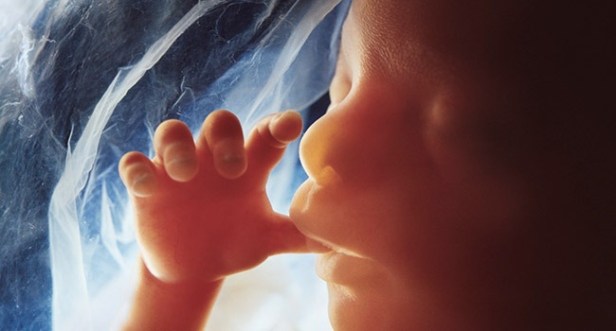
- The unborn are people
- A woman’s right to exercise bodily autonomy does not qualify as one of the exceptions to 1
I’m going to address four more arguments for abortion, and show how I believe they also are ultimately addressed via this three-step framework.
Women cannot have full equality with men unless they can control their reproduction
I’m going to just agree with this point on its merits, though plenty of people (mostly though not exclusively pro-life) might strongly disagree. I do think that the fact that men can (and do) walk away from unplanned pregnancy far more easily than women means pregnancy and parenting has a hugely asymmetric impact on men vs women, and I also believe that the availability of abortion reduces this asymmetry (it can never be fully eliminated due to biological differences – walking away from a pregnant partner is not the same as having an abortion, even if the long-term effects vis a vis not having a child to raise are the same).
Like several of the cases I considered in my last post, I would say again that this point is essentially an argument for another exception to point 1. In other words, it is generally wrong to kill innocent people, but if not being able to kill a particular innocent person massively impacts gender equality, then that’s sufficient reason to grant an exception for a whole class of people (namely, unborn babies).
This certainly holds water as an argument – but I think we should ask again whether we would apply this exception to any other class of humans. For example, the reason pregnancy has this asymmetric impact on women vs men is almost entirely driven by the babies after they are born. However, would we use that logic to justify legal infanticide as well as than legal abortion? If not, then we are showing that gender equality is not a justification for killing innocent humans in general – it’s just a justification for killing humans before they are born. In that case, what is it about unborn babies that puts them in this separate class? And to answer that, you need to refute point 2 or 3 above.
You can’t decide for someone else what is right for them. Only they know what is best for them and their family and their life
This isn’t so much an exception to point 1 as it is an argument against point 1. Presumably, no one would count a murderer deciding that committing murder was the best thing for them and their family and their life as justifying murder. Even in an extreme blackmail situation, for example, where someone’s family is being held hostage and they are told to kill someone or have their own family killed, we would say that someone who committed murder in those circumstances does not bear any culpability for the murder – but we wouldn’t say the murder itself was any less wrong.
Similarly, if someone is OK with someone deciding that an abortion is the best choice for them, their family and their life (and there are many such people who really do decide this) but they are not OK with someone deciding that infanticide is the best choice for the exact same person and the exact same family under the exact same circumstances, then they are yet again relying on some difference between abortion and infanticide, rather than on the reasons for choosing abortion, to justify abortion. Again, we would ask: what is the relevant difference between abortion and infanticide? We’re not saying there is no difference – there are lots of differences, of course! We’re asking, of all the differences between abortion and infanticide, which is the relevant difference that makes abortion OK but infanticide not OK?
You’re putting women’s lives and health at risk
I am not going to get into semantics about whether we should call procedures to save a woman’s life that result in the unintentional death of an embryo or foetus “abortions” or not – I’m just going to call them medically necessary abortions. Come at me all you like.
I’m totally OK with acknowledging that pregnancy can have massive, long-term impacts on a woman’s health. It is thankfully rare for such impacts to be both massive and long-term, but that’s not really the point. The question is: is abortion justified as a means of protecting a woman’s life? What about her health?
My very short answer to both questions is “Yes” and “Probably not”, and my very long answer cannot possibly fit in one blog post. However, I would make two points. First, when it comes to saving women’s lives, this really counts as another exception to point 1, except in this case it’s an exception that I’m happy to allow. In fact, legal theory that allows for killing in self-defence does a lot of the leg-work in getting this over the line. There are a lot of worrying developments in some US states in particular where pro-life laws are insufficiently careful and/or clear and are creating unnecessary risk for women. This is very bad and it should stop.
My second point, however, is that these circumstances are (a) quite rare and (b) not as impossible-to-diagnose as some pro-choice advocates would lead people to believe. I think pro-life people do overreact here, and want the law to be too stringent. I think it’s OK to give doctors the legal and regulatory space they need to ensure that no woman’s life is ever at risk due to legal protections for unborn babies. I think this even if there are unscrupulous doctors who will exploit this space to perform medically unnecessary abortions. I think this is a potential problem that pro-life movement should address in other ways, most notably by trying to move the culture so that all people, including obstetricians and other medical personnel, are all motivated to protect and preserve unborn as well as born life.
So in short, I think protecting women’s lives during dangerous pregnancies is possible while protecting unborn babies’ lives, and that in the vast vast majority of cases, there is simply no tension here. This might be a good argument for changing medical regulations and law, including well-meaning pro-life laws, and I’d love to work with pro-choice people to do so! It’s not a good argument for wide-ranging legal abortion, because this argument does not contradict points 2 or 3 above.
Forcing women to have babies they’re not able to provide for is wrong; it is wrong to make babies who will be neglected and uncared for
I have a lot more sympathy for this position than many pro-life people. I think pro-life people are too quick to dismiss the fact that raising kids is really hard, and raising lots of kids while facing financial strain is very hard and leaves impacts on our kids. This is a big problem, and it’s getting worse as the generations of child-bearing age are increasingly materially disadvantaged relative to their parents and grandparents, while parenting standards are growing ever more stringent.
However, once again, I would say that this is best seen as an argument for an exception to point 1: it is wrong to kill human beings, unless those human beings would be neglected and uncared for. And again, I’d say that this is fine to propose as an exception, as long as you’re willing to apply the exception to born as well as unborn humans.
Are most people willing to do this? I would say not. Consider a far more extreme case of neglect or hardship: that of “mercy killing” by the military. This is a practice with a long history in military conflict, where soldiers kill wounded combatants who have been fatally injured. Even in these situations, where the soldiers will die anyway, and will experience intense suffering in the meantime, mercy killing is illegal, and explicitly prohibited by the Geneva Convention and international law. If preemptively killing someone to save them from suffering is not acceptable in a military context, why is it acceptable for unborn babies? Again, chances are, because you’re relying on another relevant difference between unborn babies and born people – so again, you need to refute point 2 or 3.
I do recognise how clinical these blog posts have sounded. I am not trying to minimise the intensity and importance of all these points, and others, raised by the pro-choice side, and I think the pro-life side often unintentionally does so by arguing back on why some or all of the situations outlined above would actually be “that bad”. However, it seems to me that the arguments made by pro-choice people really all stem from an underlying premise: that life is precious, and important, and worthy of protection, but not at any cost. I accept the sincerity of that position – but I think it’s a dangerous road to go down. I think conceding on points 1-3 above has been responsible for almost all human rights atrocities throughout history, and still today, so I think it is actually worth paying a very high cost to hold on to them. As a pro-life person, the position this leaves me in is one of trying to reduce those costs as much as I possibly can. We are sincere in our desire and attempts to do so here at the Minimise Project. That being said, if you have any ideas, please do let us know – we really welcome all the help we can get.
Muireann
 The Minimise Project